Work / 005
Nuevas Floras
COLOMBIA
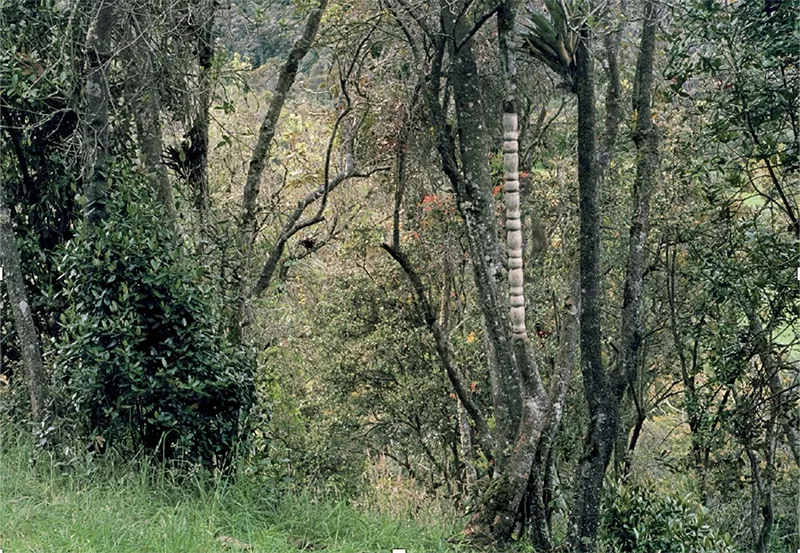
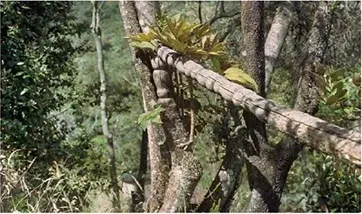
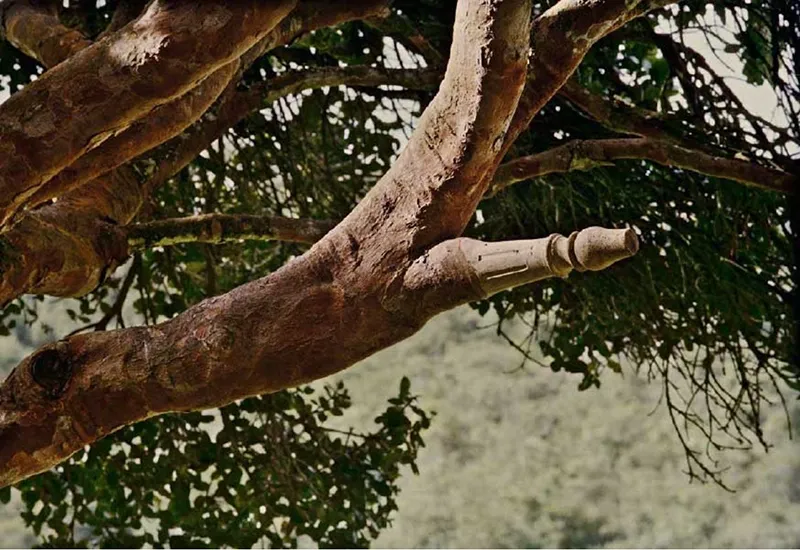
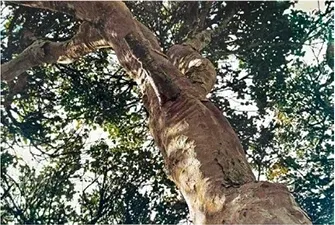
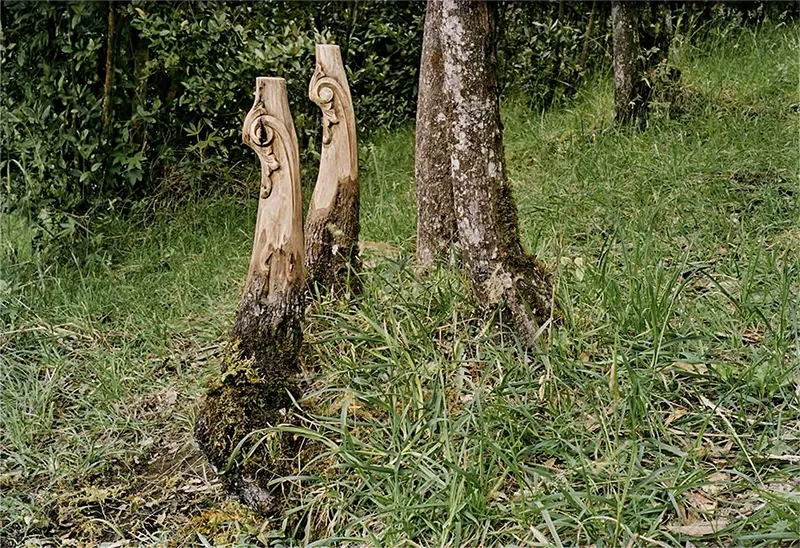
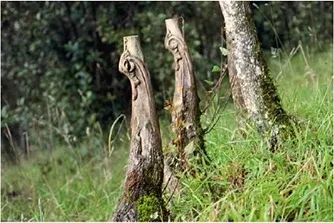
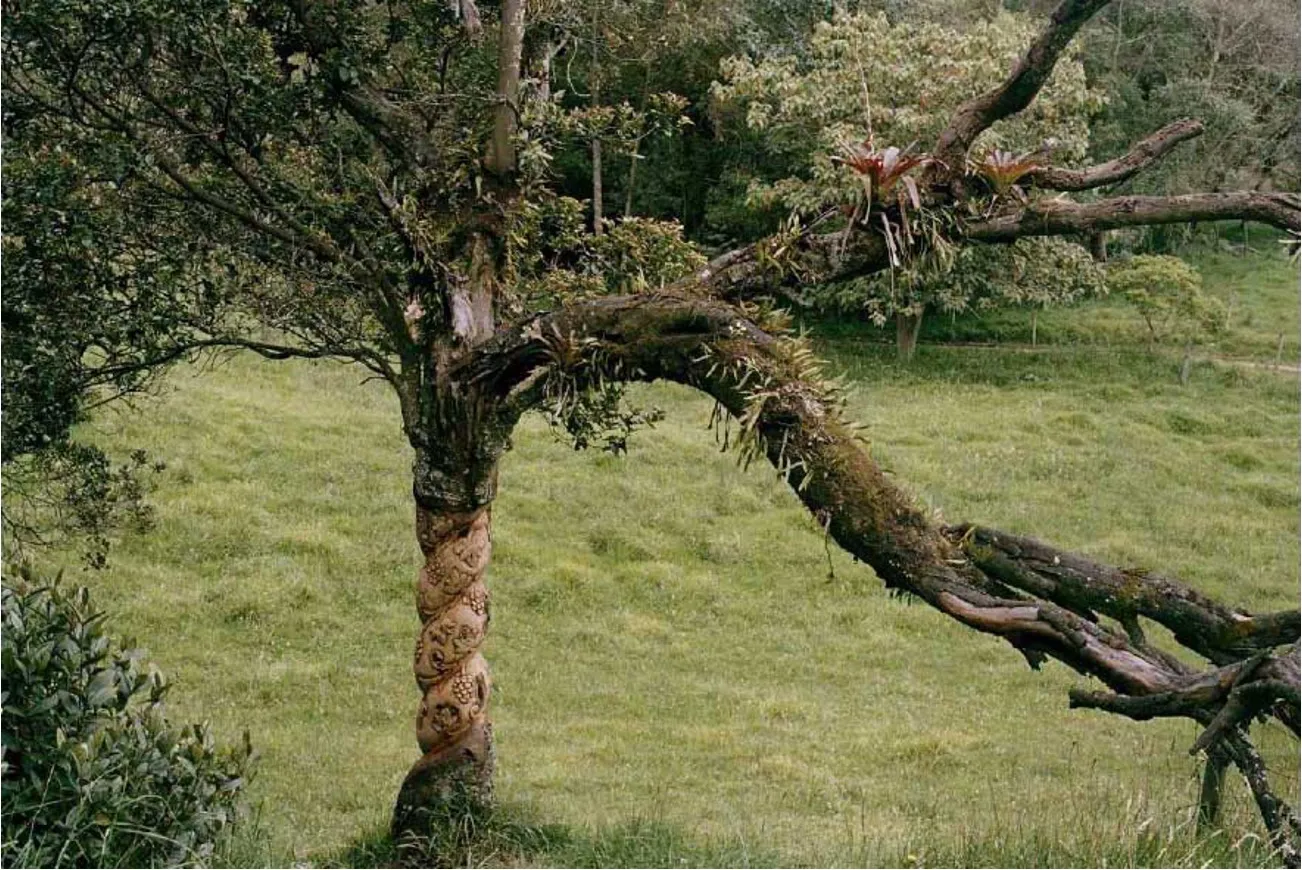
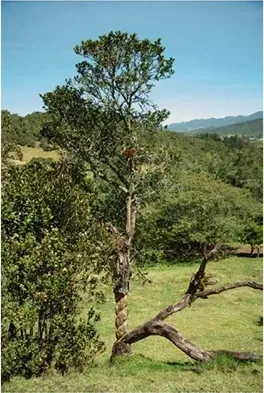
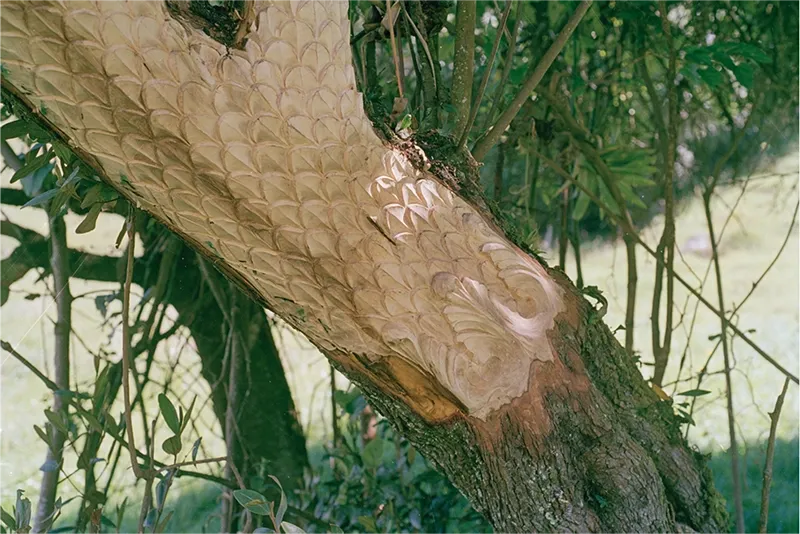
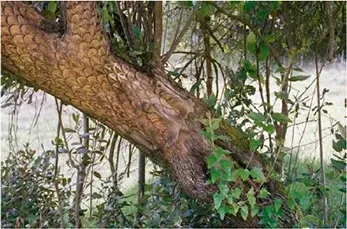
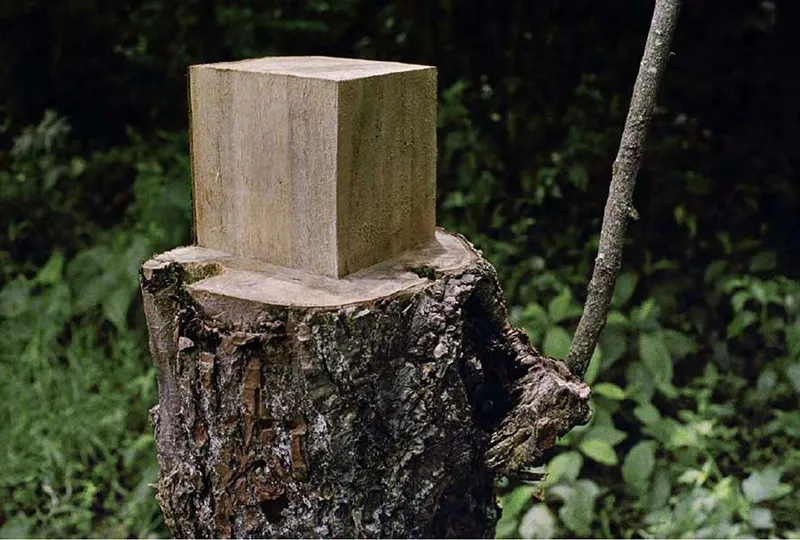
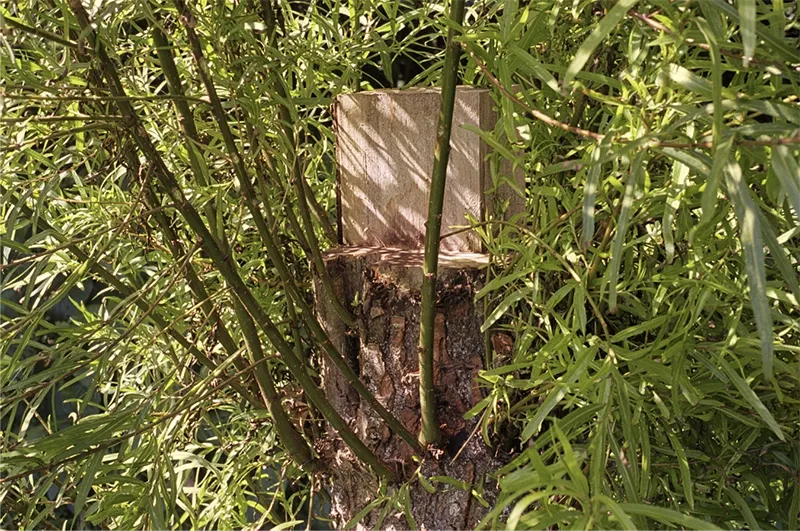
Nuevas Floras is a series of interventions in the landscape, carried out on some trees of native forests in the mountains near Bogota, belonging to the Central Cordillera. Carved pieces made from their own wood have been applied to these trees, or parts of some of their branches or trunks have been carved.
A master carver participated in the project, carrying out the carving work on the 7 trees, following models provided by the artist that come from colonial and baroque furniture and architecture.
Nuevas Floras is composed of seven large-format color photographs (80 x 120 cm) taken immediately after the carving process was completed. The project aims to follow over time how each of the trees will process these interventions. Therefore, these photographs represent the first stage of a living process in continuous change.
From 2004 onward, Nuevas Floras became a nomadic project that responds to the specificities of the relationship between culture and nature particular to each place.
NUEVAS FLORAS BRISTOL
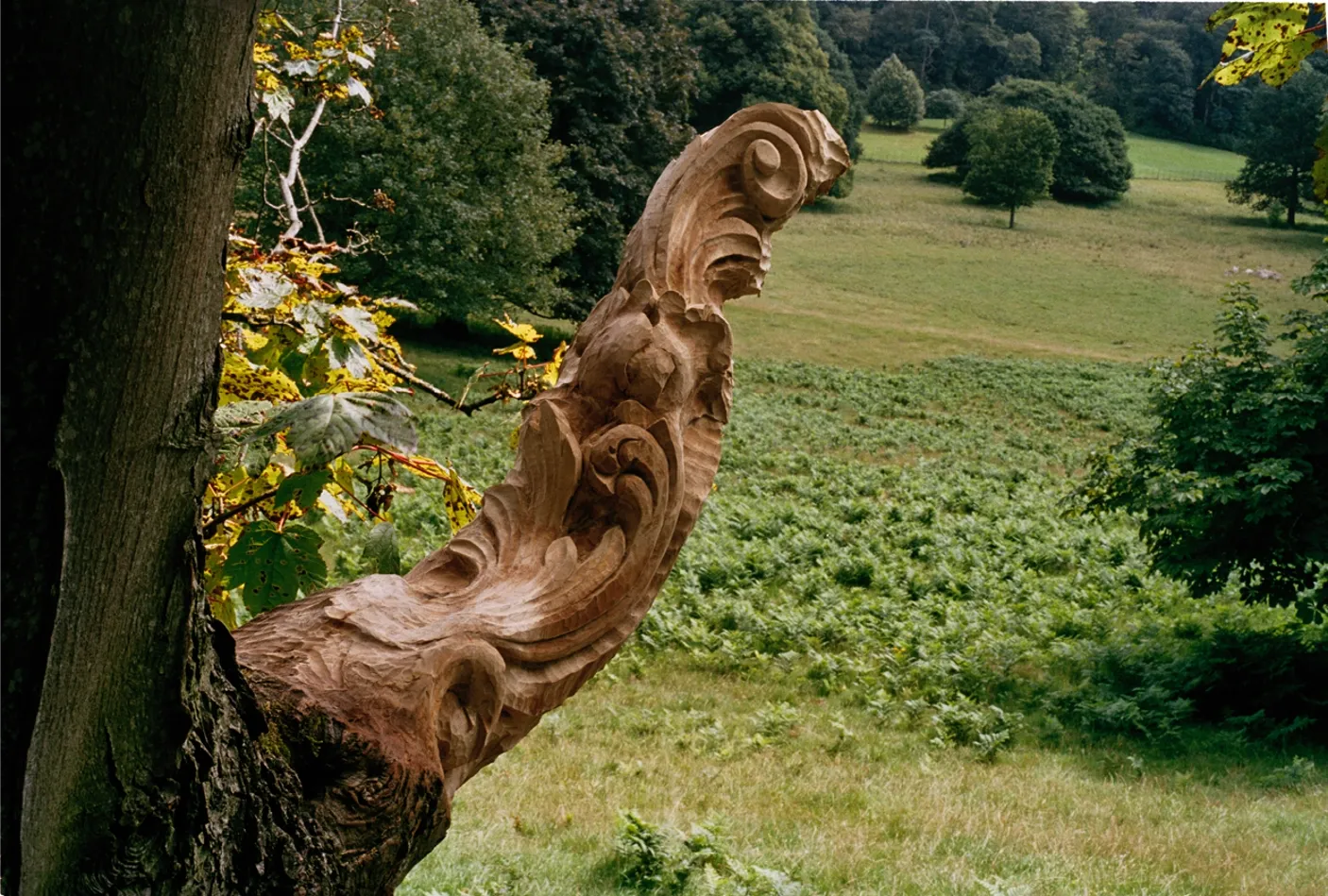
The Nuevas Floras project, in its nomadic phase, was first developed in the United Kingdom, with the help of an art restorer, R. Peploe. On that occasion, the branch of a Sycamore was intervened in Ashton Court Estate Park (Bristol). This park is a representative example of what is known as “the English natural landscape.” It was carried out in the context of a Visiting Arts artistic residency at Spike Island, Bristol, during 2004 and 2005.
NUEVAS FLORAS DO SUL
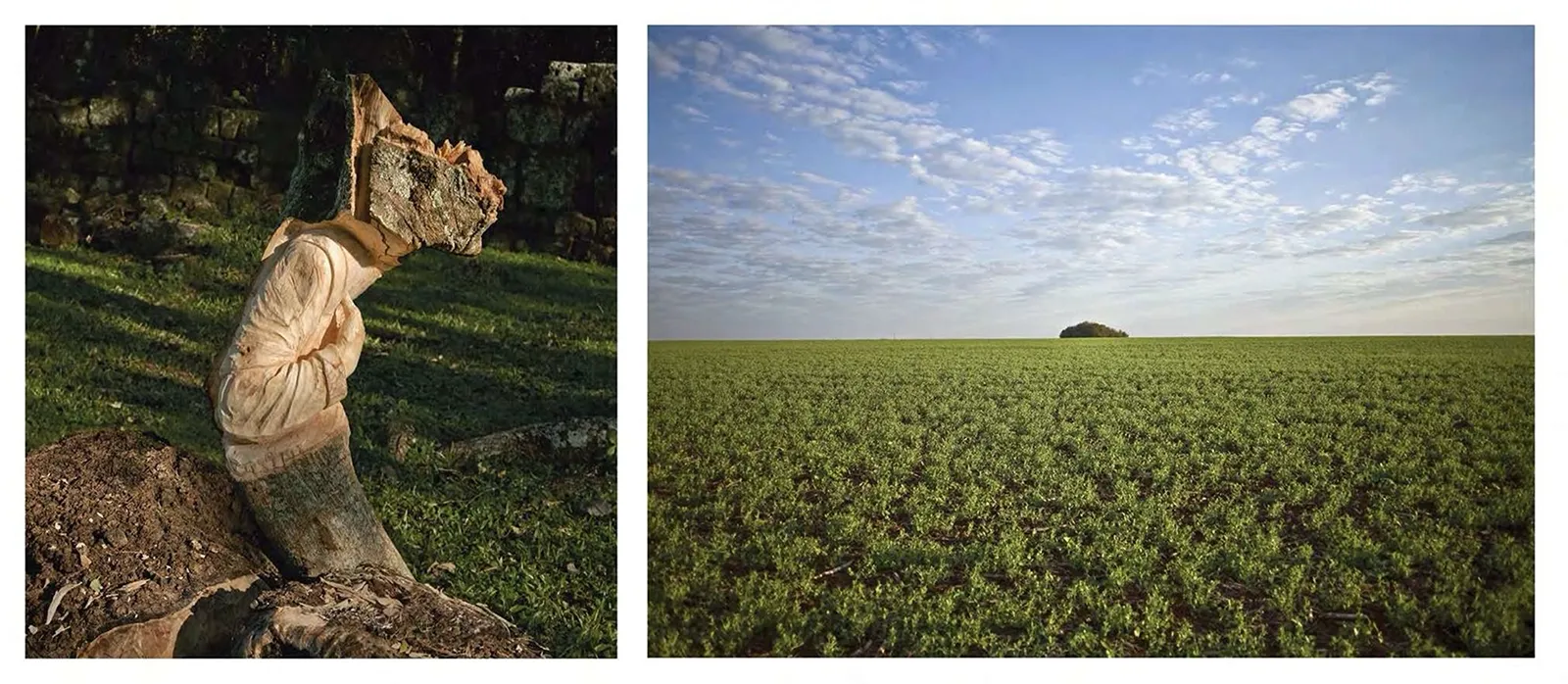
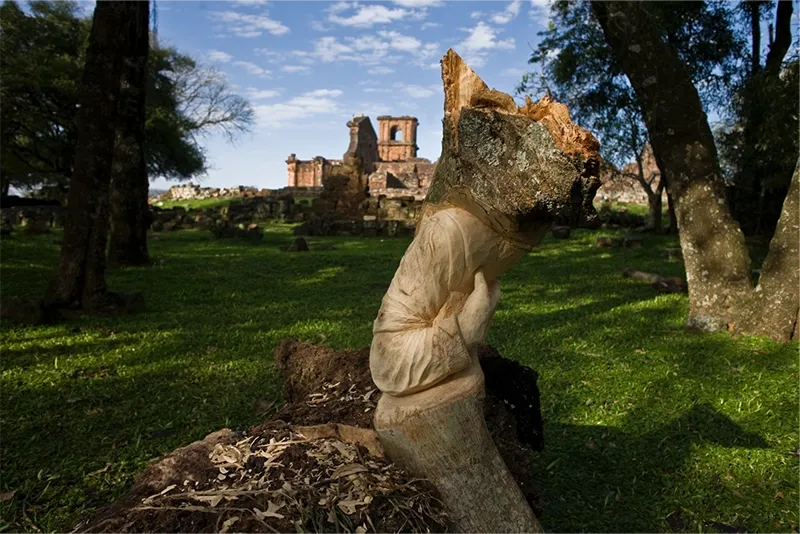
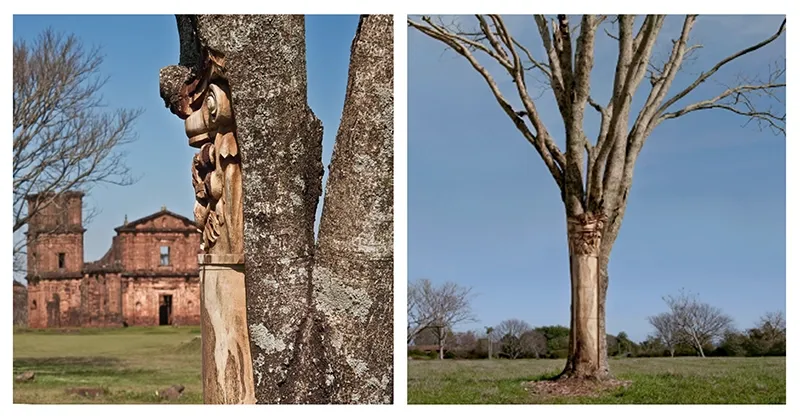
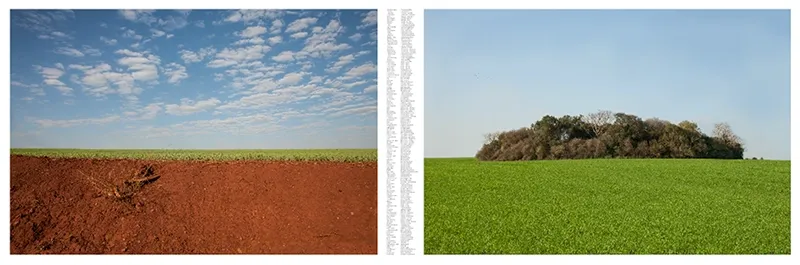
In 2011 the Nuevas Floras project was invited to the VIII Mercosul Biennial to carry out an intervention at one of the sites of the old Missions that the Jesuits created to evangelize the Guarani indigenous people, in southern Brazil. The work, carried out in the National Historic Park of São Miguel das Missões, responds to the direct experience of the landscape of the area and of the statuary pieces found in the Museum.
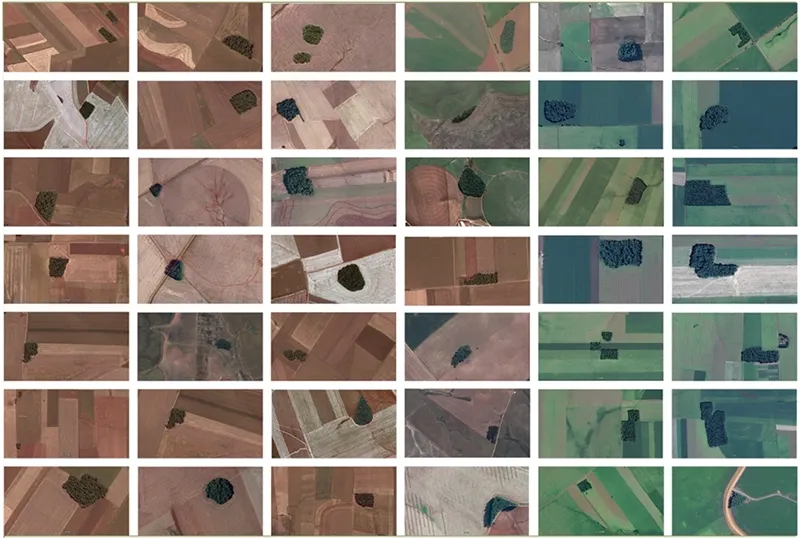
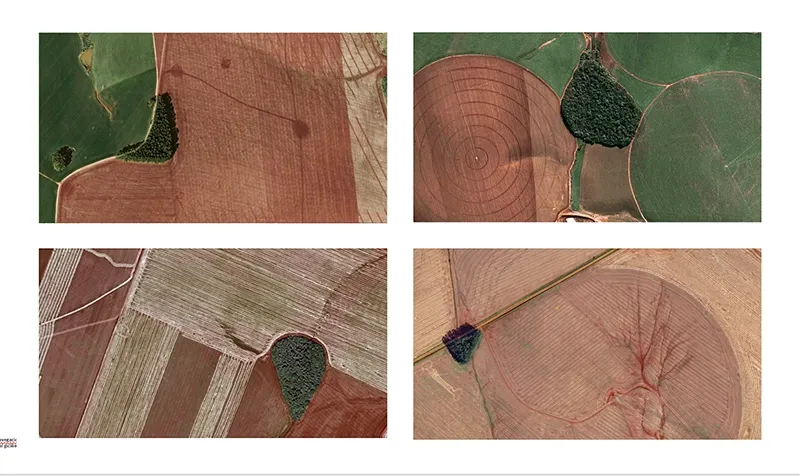
The landscape along the road to San Miguel is dominated by enormous monocultures of soy and millet. From time to time, small still-surviving islands of native flora come into view, resembling an oasis. Visiting them, I found gathered within a few square meters trees and plants of a wide variety of species that once populated those lands. I clearly felt agriculture to be the great shaper of the landscape.
These “islands” are preserved by a decree of the Brazilian government to protect the migrations of birds that would otherwise find no rest on their journey.
Fallen branches of some native trees and a tree that had already dried up were intervened with carvings alluding to the architecture of the temple and to the statuary of the Museum — in particular, to the figure of San Isidro Labrador, patron saint of agriculture. The original posture of the saint, who looks toward the sky in a gesture connoting strength and confidence, was modified and placed in relation to the current landscape of the area.
The series is complemented by a satellite exploration of the road from Porto Alegre to São Miguel das Missões, in search of islands of native flora that have survived the monocultures. The series “Camino de San Miguel” and “Navegaciones sobre Rio Grande” present these images.
(*) Several trees of the intervened species were planted in the park.
NUEVAS FLORAS VERSALLES
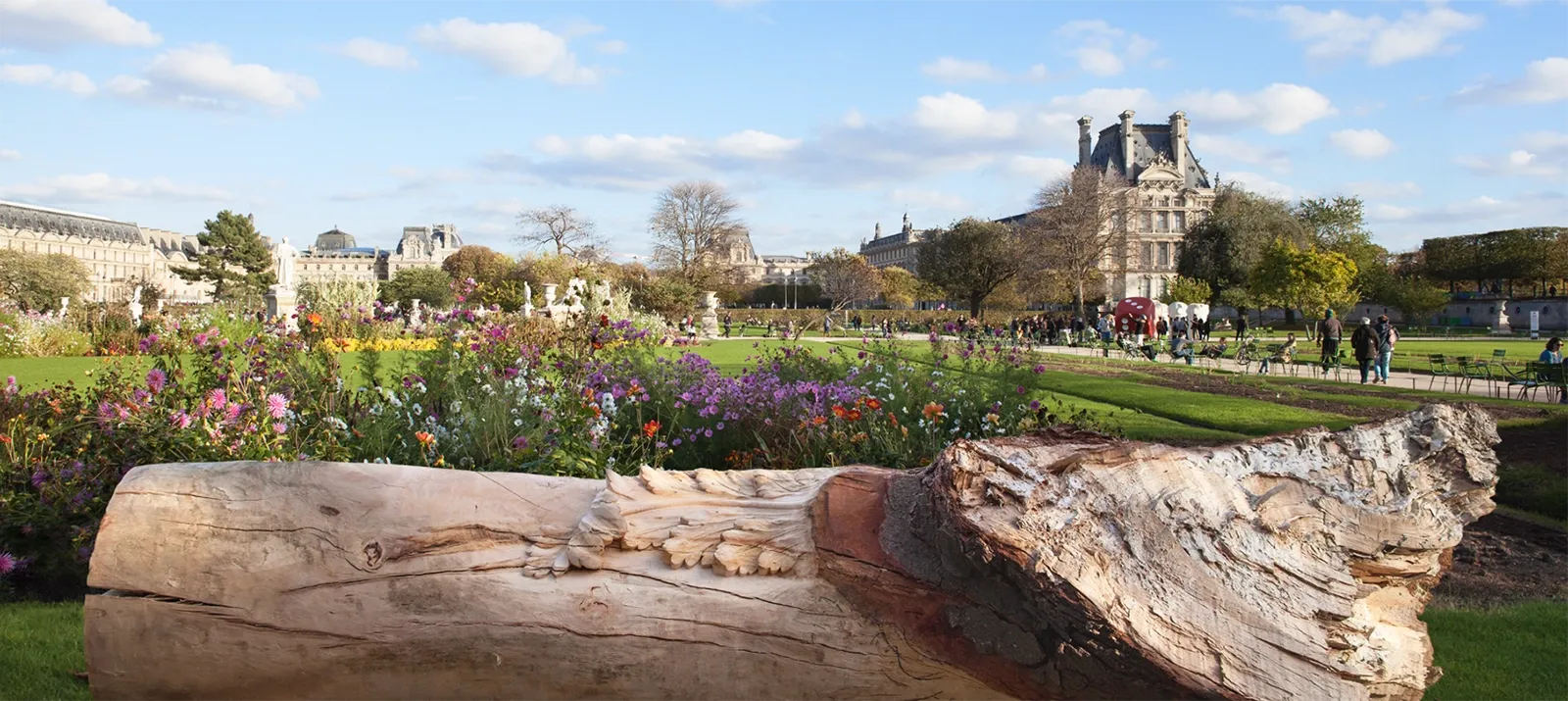
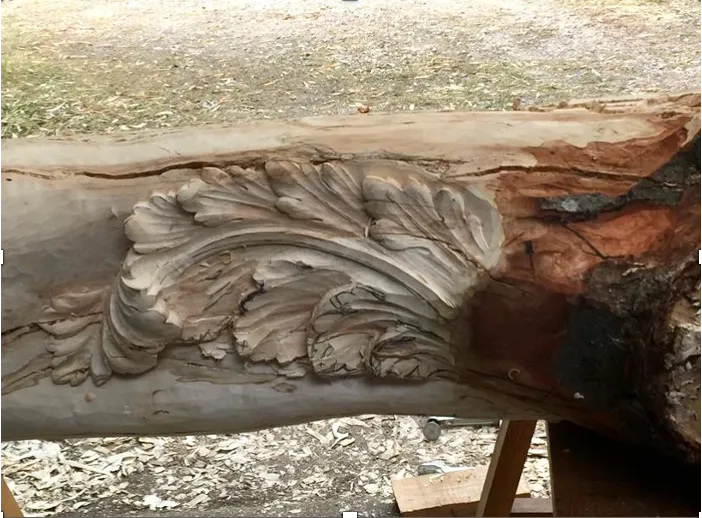
Nuevas Floras Versalles was carried out in 2017 on a botanical estate called the Arboretum de Chevreloup, which once formed part of the Gardens of the Palace of Versailles as a hunting ground and is now a vast collection of trees from all over the world, belonging to the Natural History Museum of France. The invitation took place within the framework of the Colombia-France year.
The carving was carried out on two large branches of a white chestnut that had torn away from the trunk due to an ailment of the tree.
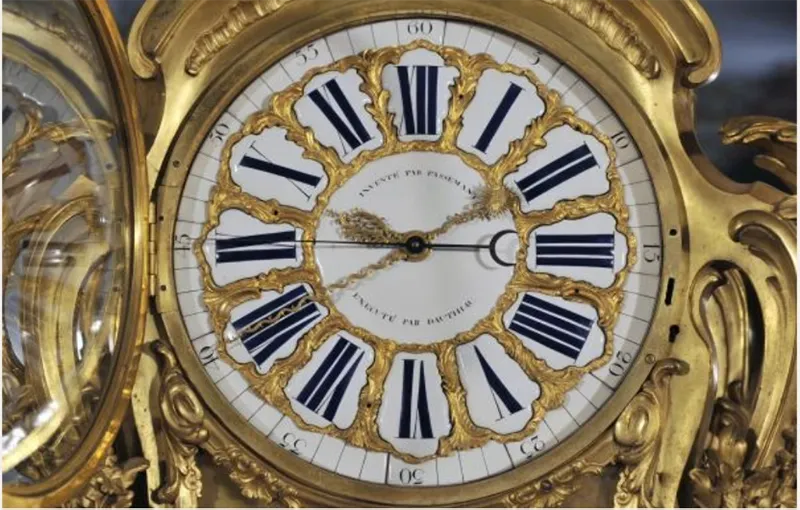
The Gardens of Versailles respond emblematically to the conception of nature proposed by the French baroque garden. Man controls and believes he directs nature according to the aesthetic parameters of the era. The design was chosen from among the decorative elements of the Palace of Versailles and takes the form of the hour hand of Louis XV's Astronomical Clock.